What a Home Inspection Actually Covers
Most first-time buyers I work with think of the inspection as a test the house either passes or fails. There is no grade at the end. The inspector is not there to tell you whether to buy the house. They are there to tell you what condition it is in so you can decide for yourself. You need to know your home that is very important.That shift in thinking makes the whole day easier. Here is what actually happens.
What the inspector looks at
A home inspection is a visual review of the parts of the house the inspector can safely see and reach. On a typical home in the Edmonton area, that means:- The roof. Shingle condition, flashing, vents and any sign of past repairs.
- The exterior. Siding, trim, soffit, eavestroughs, decks and how the ground slopes away from the house.
- The foundation. Visible cracks, settling, moisture staining and the condition of the basement floor.
- The attic. Insulation depth, ventilation and any evidence of moisture or pests.
- Heating and cooling. The furnace, its age, the ductwork and any air conditioning unit.
- Plumbing. Visible supply lines, drains, the water heater and water pressure at the fixtures.
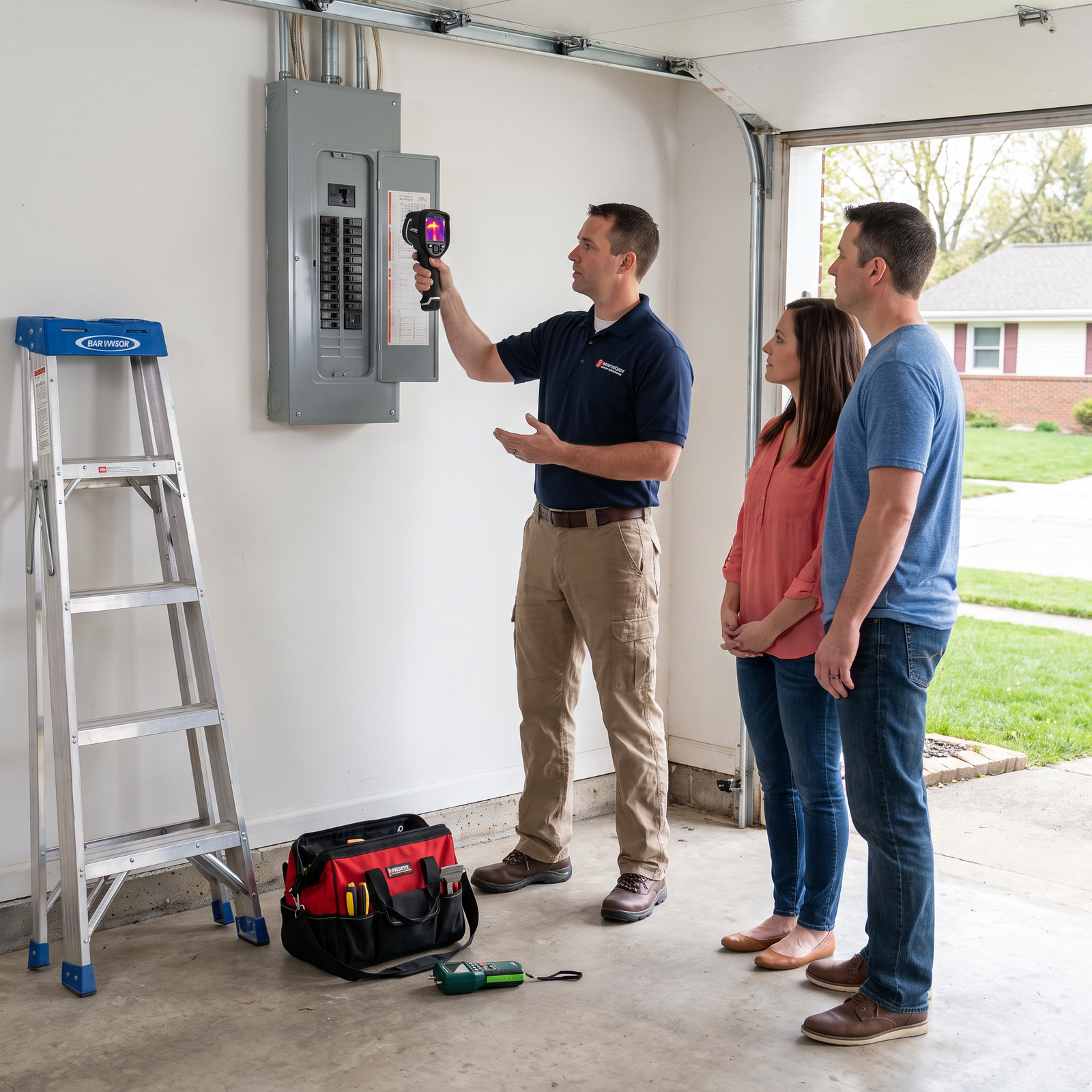
- Electrical. The panel, the type of wiring where it can be seen, outlets, switches and smoke alarms.
- Interior. Windows, doors, floors, ceilings and walls, plus a look for signs of past water damage.
What the inspection does not cover
This is where expectations tend to slip, so it is worth being clear.An inspector does not open walls. They do not lift flooring or dig up the yard. Anything hidden behind finished drywall or buried underground sits outside the scope. In a fully finished basement, a large share of the plumbing and wiring is simply not visible.They also do not inspect what is not there to inspect. If the water is shut off, the plumbing cannot be tested. If there is a metre of snow on the roof in February, the roof review will be limited. A good inspector notes these limits in the report rather than guessing.Certain things are usually separate services with their own cost: sewer line scoping, radon testing, asbestos or mould testing.Things that come up often in this market
A few items show up repeatedly on Edmonton area reports. None of them are automatic dealbreakers. They are just worth understanding ahead of time.Grading and drainage. Our clay soil moves. Ground that slopes toward the foundation instead of away from it is one of the most common findings and often one of the cheapest to correct.Furnace age. A furnace has a working life. In a climate like ours, its remaining years matter to your budget even when it is running fine on inspection day.Poly-B plumbing. Common in homes built roughly between the late 1970s and the mid 1990s. It affects insurability for some carriers, so it is worth flagging to your insurance broker early.Older wiring. Aluminum wiring shows up in some 1960s and 1970s homes. Knob and tube turns up in the oldest mature neighbourhoods. Again, an insurance conversation more than a safety panic.Attic ventilation and ice damming. Poor ventilation shows up as ice at the eaves every winter. It is fixable.What you get at the end
Expect a written report, usually with photos, delivered within a day or so. Expect it to be long. Expect it to list things you did not know were problems.That length surprises people. It should not. Every home has a list, including brand new builds still under warranty. The report is not a verdict. It is an inventory.Your job, with your REALTOR®, is to sort that inventory into three piles:- Maintenance. Things every homeowner deals with. A worn caulk line. A loose railing.
- Budget items. Real costs, but predictable and not urgent. A furnace with a few years left.
- Material issues. Structural problems, safety hazards or repairs large enough to change what the home is worth to you.
Should you be there?
Yes, if you can. You do not need to shadow the inspector for three hours. Showing up for the last forty-five minutes is often the sweet spot. You get the walkthrough, you can ask questions in front of the actual furnace or panel and you learn where your shut-off valves are before you own the place.A written report tells you what is wrong. Standing in the mechanical room with the inspector tells you how much it matters.Choosing an inspector
In Alberta home inspectors are licensed. Reports vary a lot in quality. A one-page checklist and a forty-page photo report cost about the same and are not remotely the same product.I am happy to give you names of inspectors I have worked with. I will not book it for you. You are the one hiring them and the report belongs to you.The short version
The inspection is not there to scare you. It is there to replace guessing with information before you commit to the largest cheque you have ever written.If you are somewhere in the first-time buying process and want to know what to expect at each step, get in touch. No pressure attached.Brenda Patton, REALTOR® Homes & Gardens Real Estate Limited 780-297-8437 | brendarpatton.com Serving Edmonton, Sherwood Park, Leduc and Beaumont